·
Paid ads
·
One-Click Music Promo vs a Full-Service Campaign: A $140 Head-to-Head Test
We ran the same $140 over 14 days on one-click promo vs a full-service campaign. Same goal, very different results. Here's the data and what it means.

MeansMGMT
One path is an expense that vanishes the day you stop paying. The other builds an audience you keep.
A fair fight
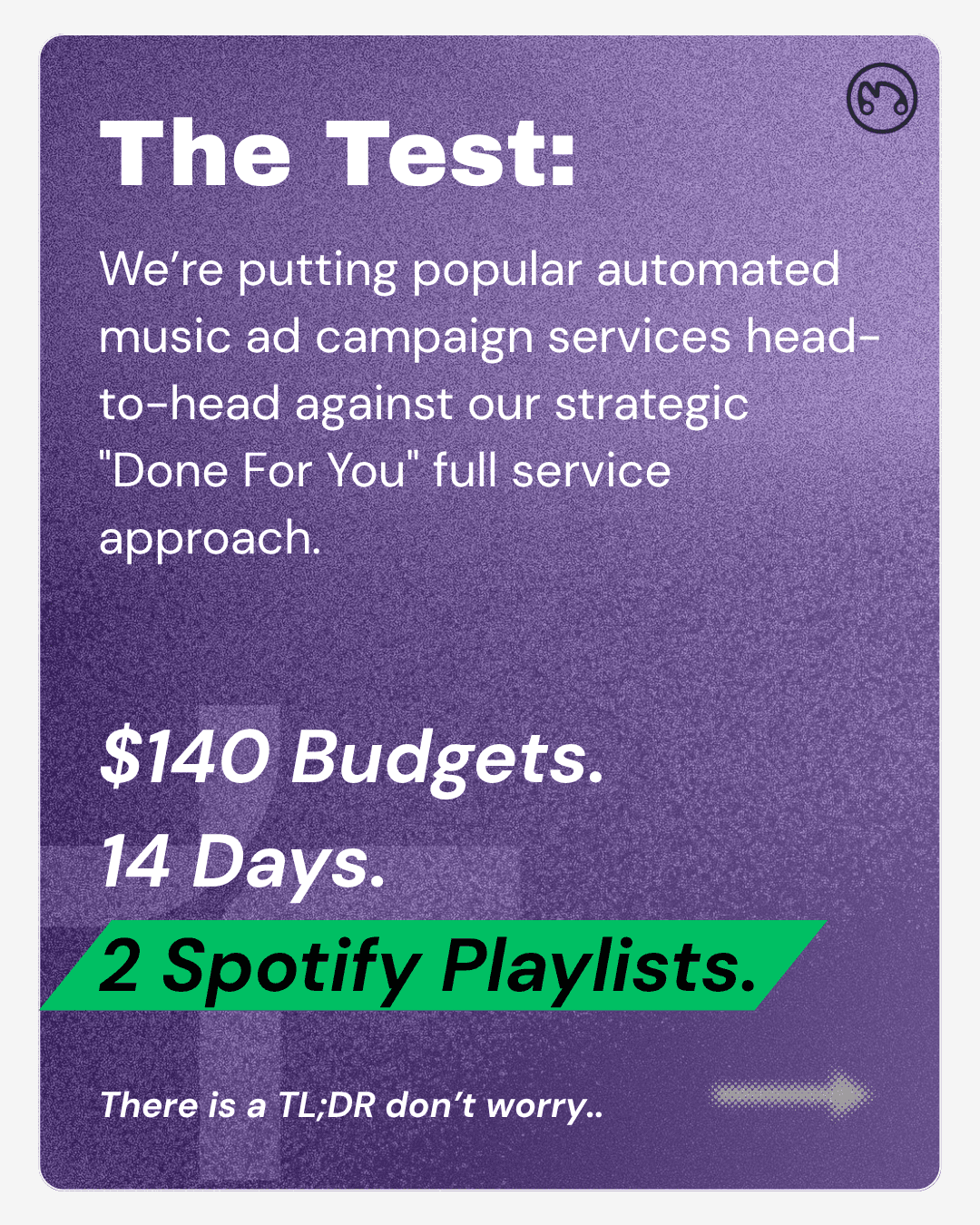
We put a leading "one-click promo" service head to head against how we actually run a campaign, our "done for you" approach. Same parameters for both: a $140 budget over 14 days, aimed at growing a Spotify playlist.
Budget: $140 each
Duration: 14 days
Goal: grow two similar Spotify playlists
The short version
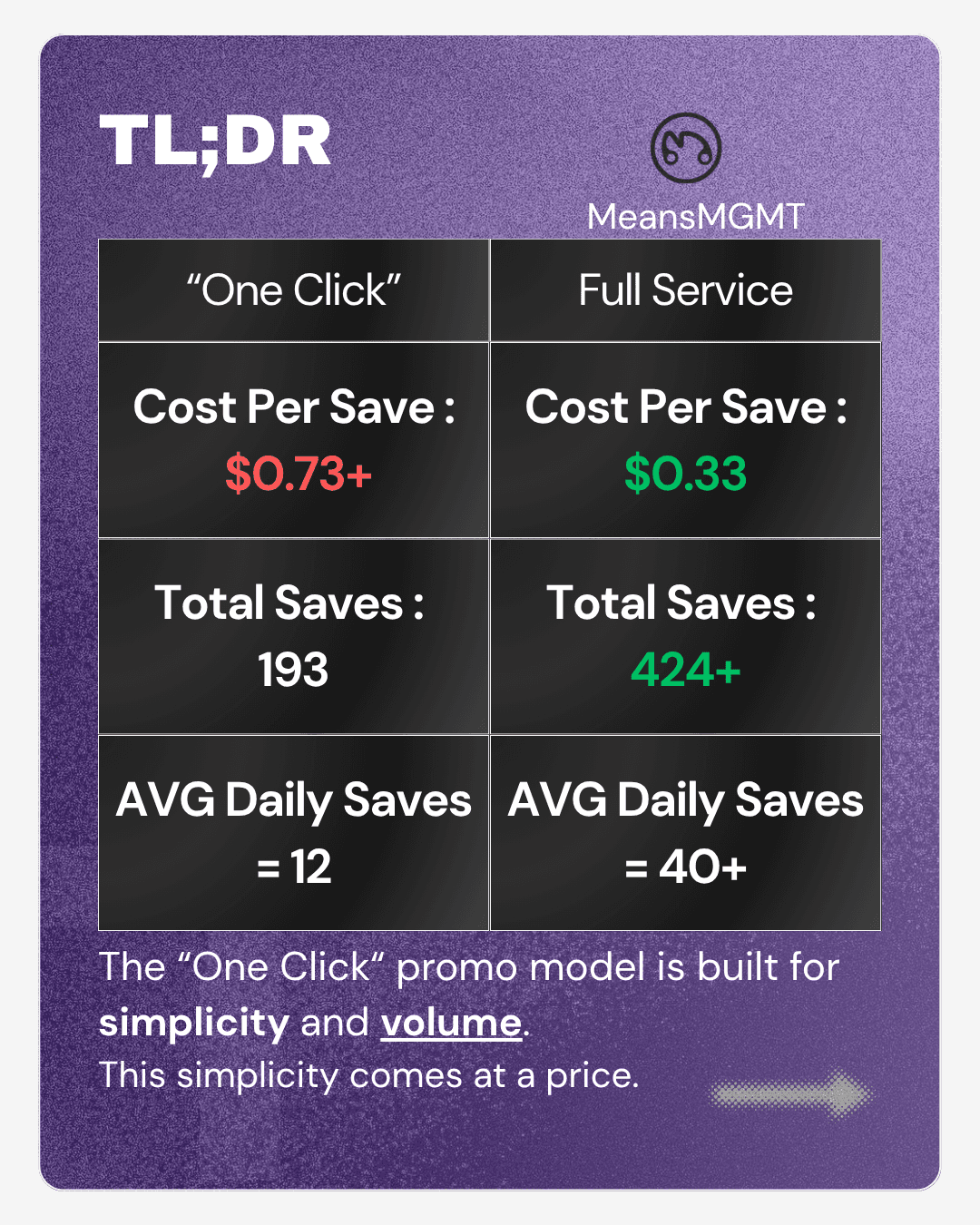
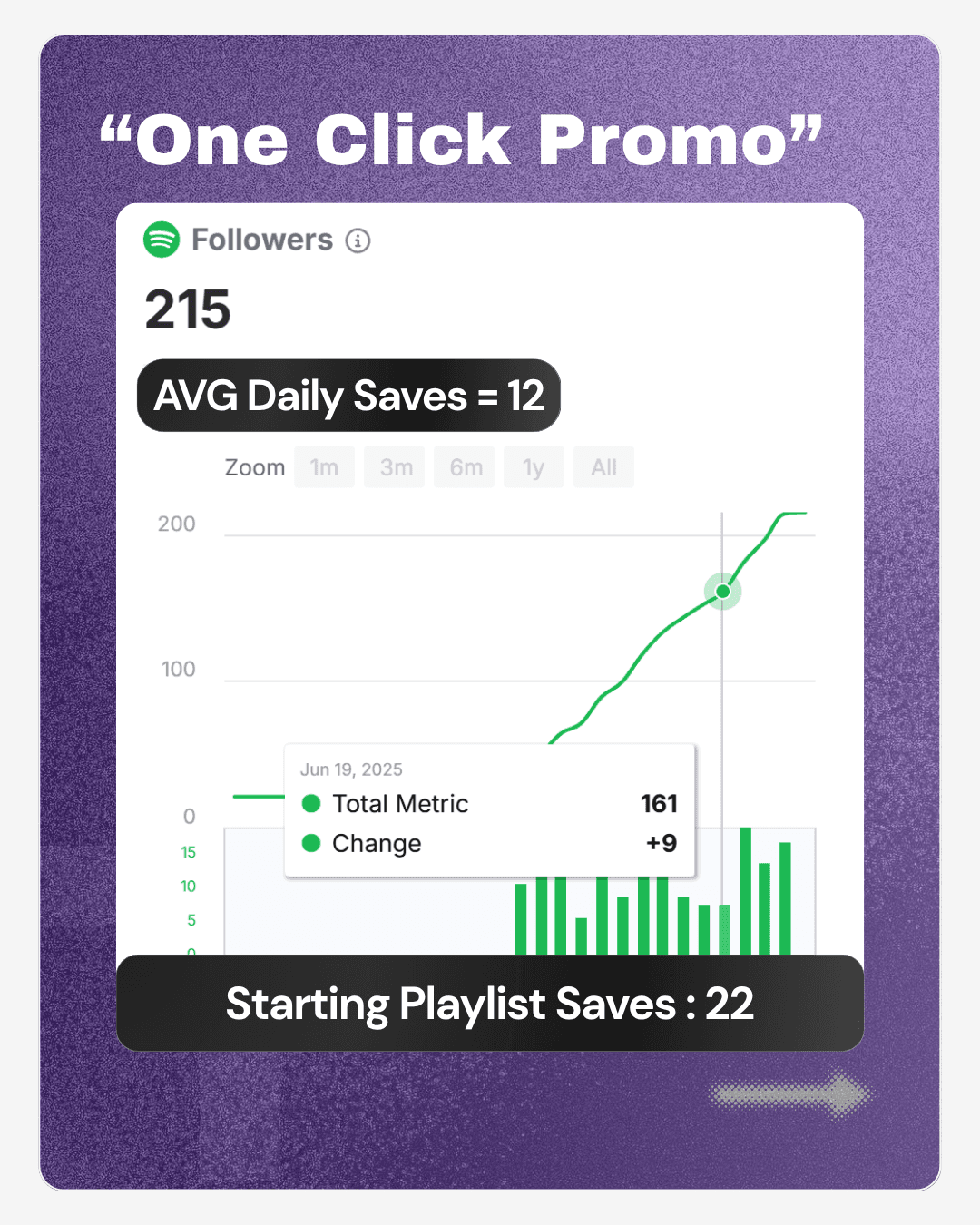
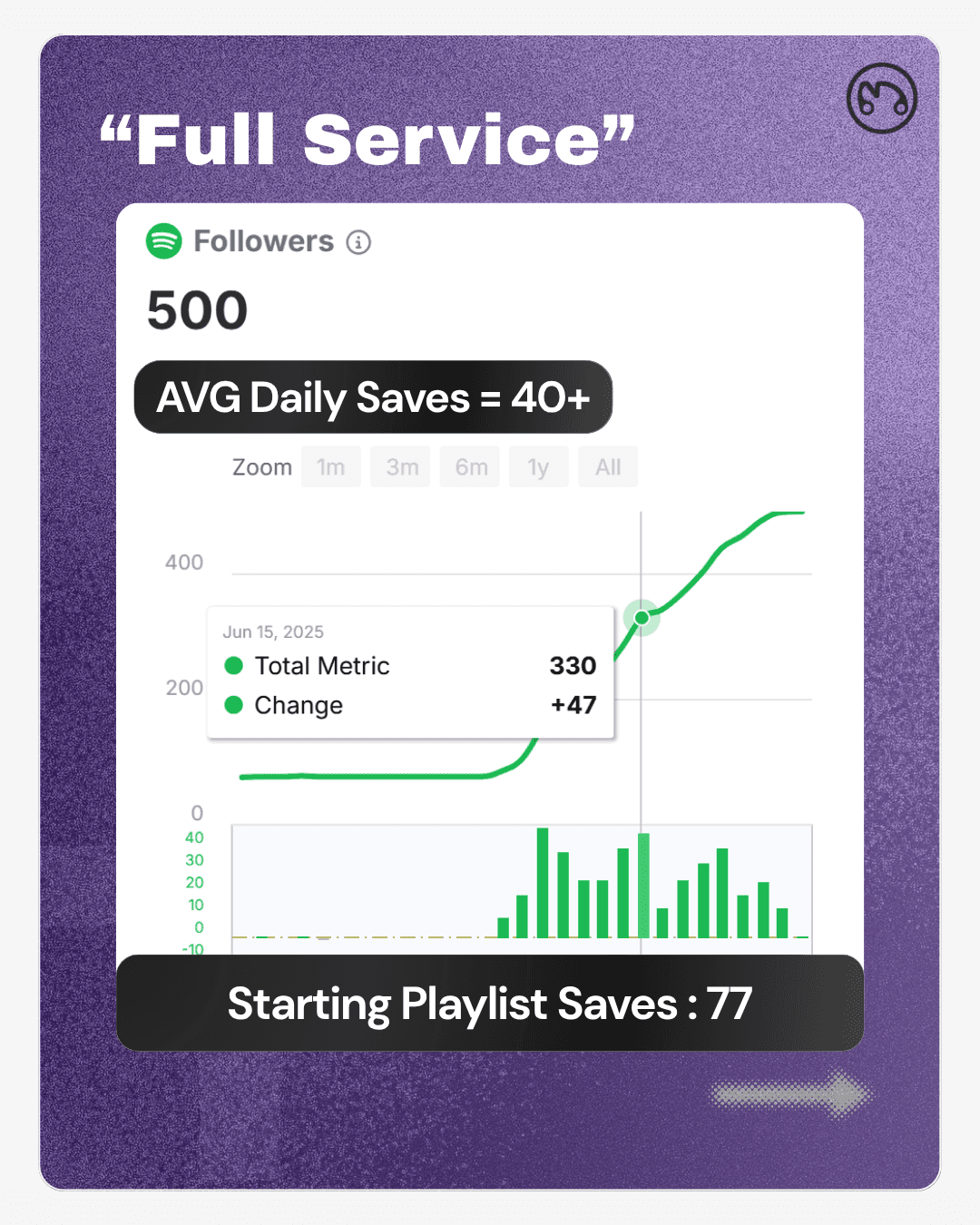
We generated 424+ total saves to their 193, averaging 40+ saves a day against their 12. The one-click model is built for simplicity and volume.
What the one-click campaign actually delivered
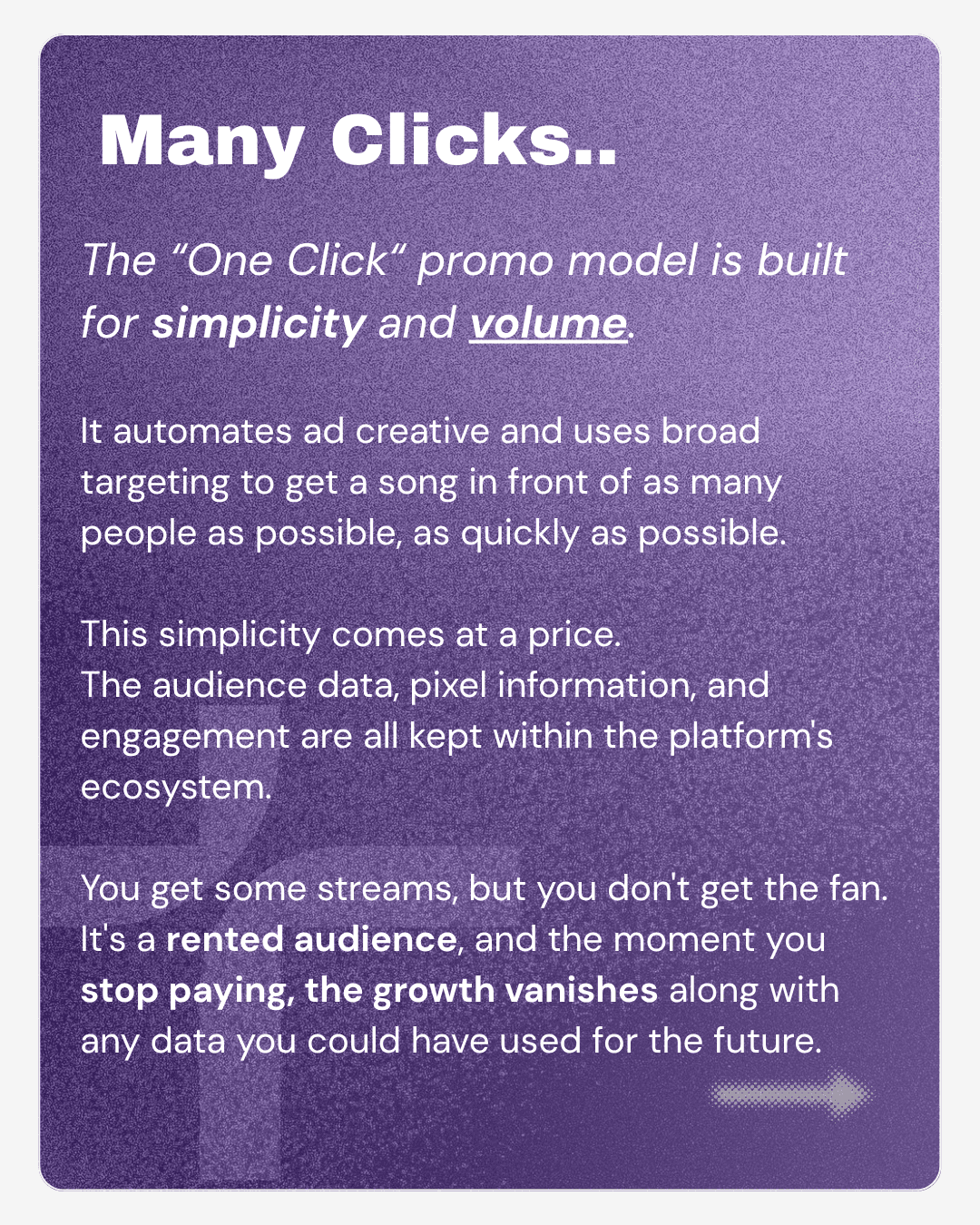
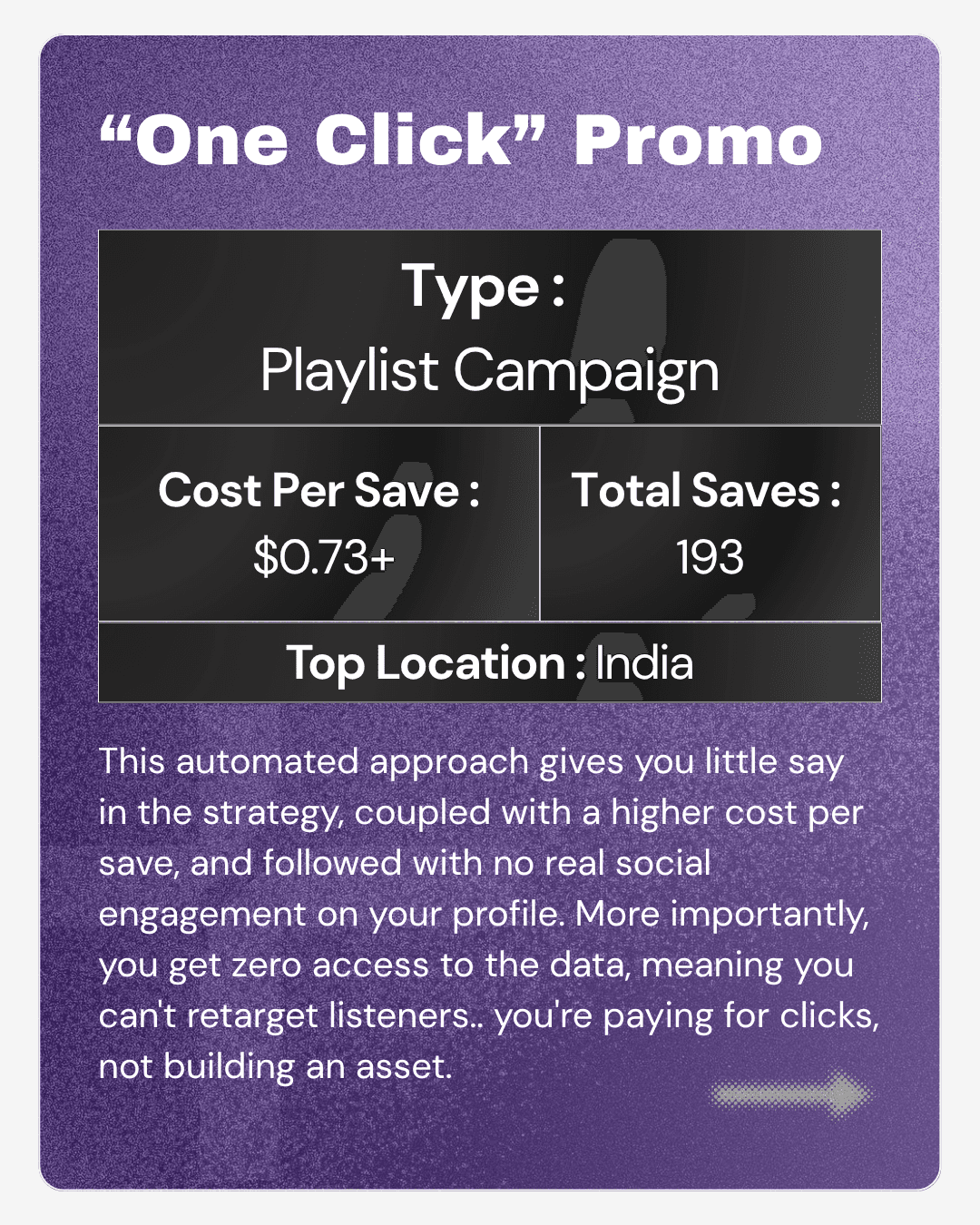
The automated service brought in 193 total saves at a final cost per save of $0.73. One detail on its own results card: the top advertising location was India. That's a common move for services chasing volume, and it usually means lower engagement and weaker signals to Spotify's algorithm.
The automated approach gives you almost no say in strategy, which is part of why the cost runs higher. The bigger problem is that you get zero access to the audience data. You're paying to build an audience on a platform you don't own. It's a rented audience, and the day you stop paying, the growth goes with it, along with any data you might have used later.
What the full-service campaign delivered
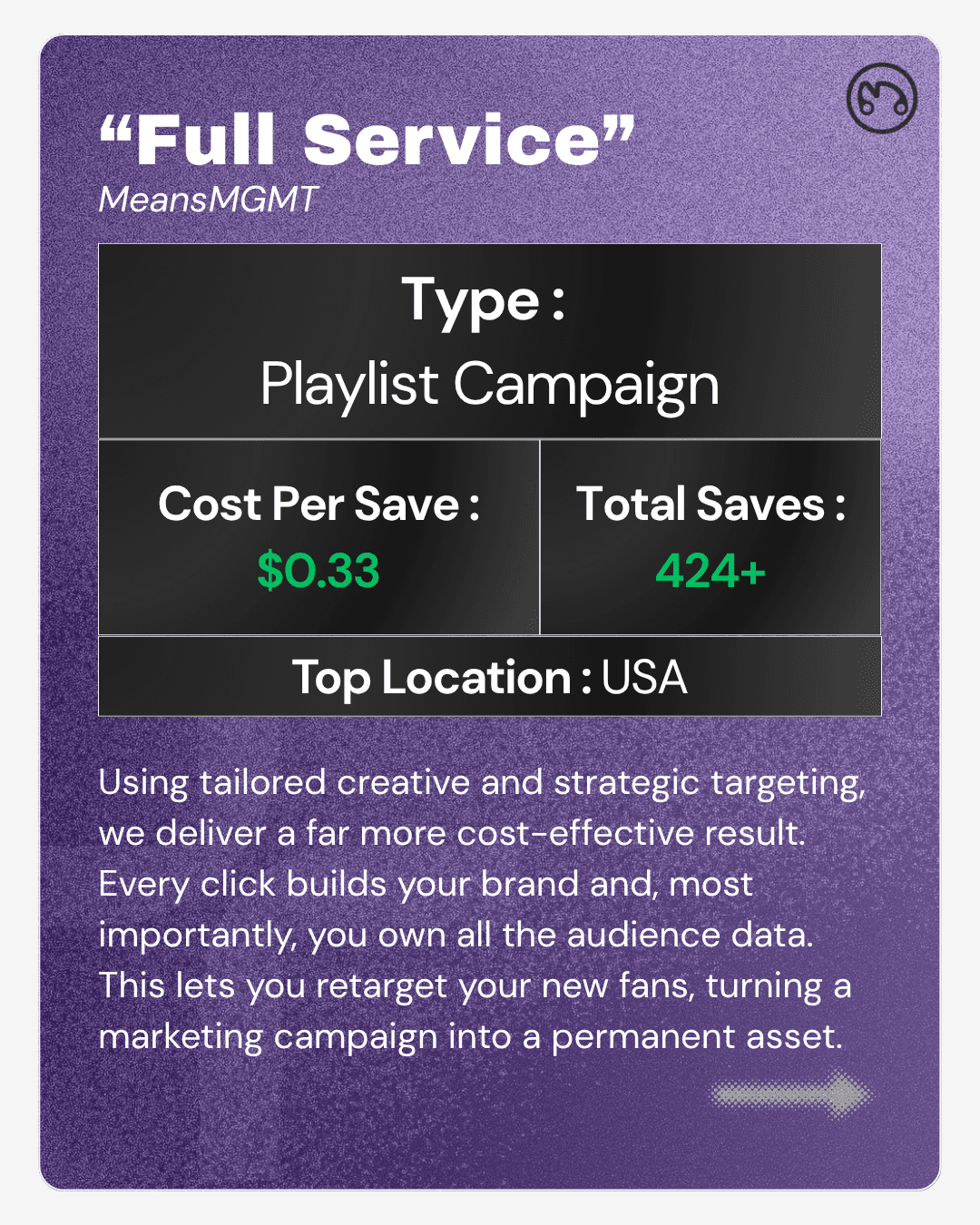
Our full-service results ran the other direction. Same $140, and we delivered 424+ saves at $0.33 each, with the top location being the USA, a higher-value market that sends stronger positive signals to Spotify's algorithm. The Spotify graph shows a visibly steeper growth curve.
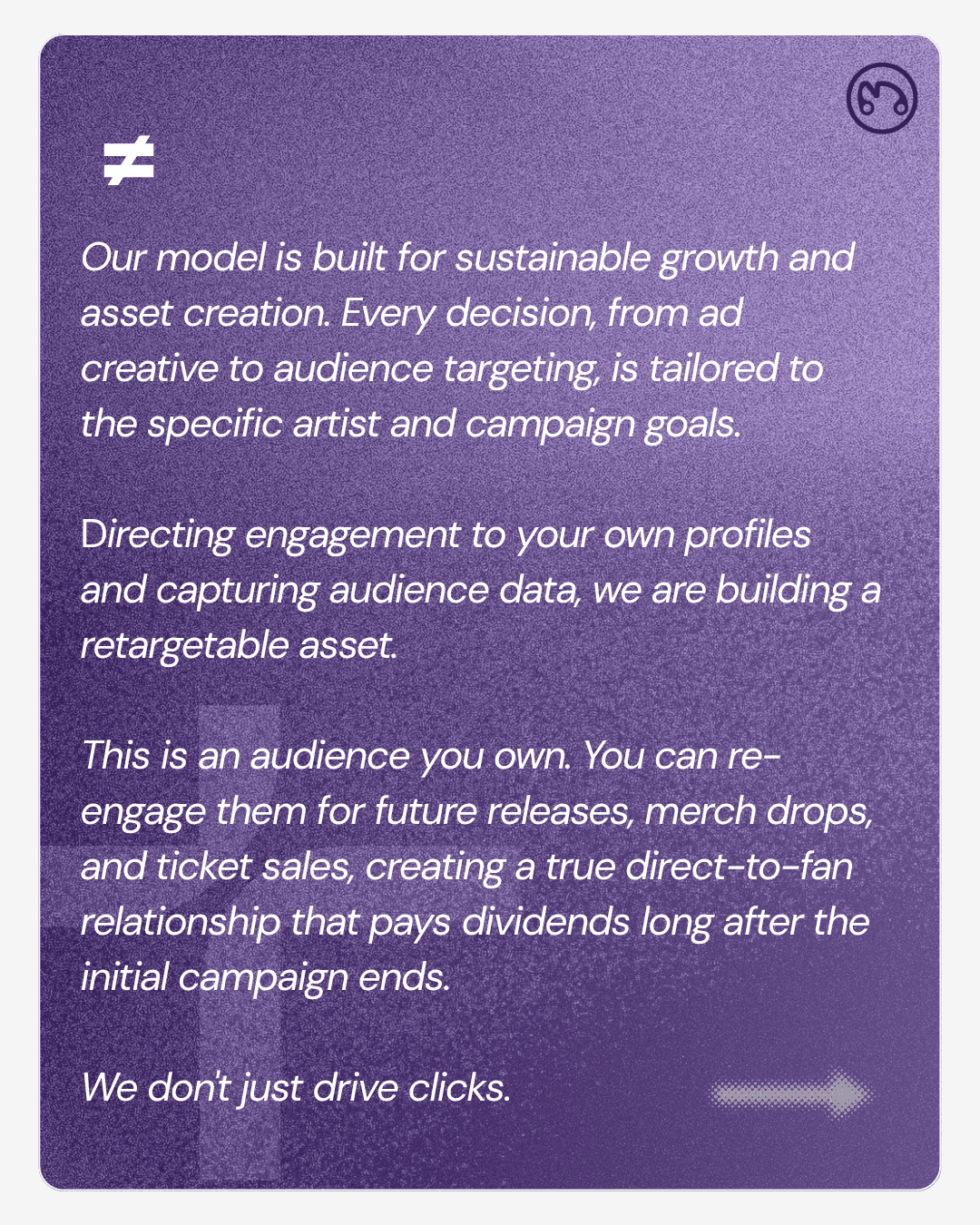
Instead of renting clicks, the campaign builds something the client keeps. Creative and targeting are tailored, and every engagement adds to a retargetable audience the client owns outright.
Expense or investment
One is a short-term expense that disappears the moment you stop paying. The other builds a real audience you can reach again.
You can pay for a temporary boost that leaves nothing behind. Or you can build a system that turns into an asset, a fanbase you can tell about the next release, sell merch to, invite to shows.
What the asset actually looks like
Here is what clients have kept from past campaigns.
Direct email lists. In a similar campaign for the label Deep Rest Records, we generated 2,005 vetted email signups on a $500 budget. That's a direct channel, independent of any algorithm, for announcing new music and merch straight to the inbox.
Owned, high-growth playlists. For the artist Arbee, we grew an artist-owned playlist from 2 saves to 1,371 in a single month. It now runs as a steady source of streams; even two weeks after we paused all ad spend, it kept generating over 3,300 new streams a week on its own. That's residual growth, the asset working for you after the spend stops.
Automated future audiences. In a pre-save campaign for the artist Ouroboros, we secured 1,480 pre-saves for one song and captured 791 "Forever Saves" through Feature.fm. That's a locked-in audience that automatically receives every future release, which reliably front-loads day-one listeners.
How the investment compounds
An expense is a single transaction. This kind of spend keeps generating.
The initial ad spend kicks off a halo effect that feeds organic growth. Drive high-quality engagement, like the 91% landing-page CTR we hit for Deep Rest Records, and you send strong positive signals to Spotify's algorithm. The platform learns who your ideal listener is and starts surfacing your music on its own through Discover Weekly, Radio, and recommendations.
The Ouroboros pre-save campaign generated 38,000+ streams in its first 28 days, a 1,400% jump over the artist's previous release. The ads worked alongside a primed algorithm and an audience that was already engaged.
One-click services are built to complete one transaction: spend X, get Y clicks. Our approach is built to grow a self-sustaining audience that's worth more over time and slowly lowers how much you need to spend to reach it.
For the cost side, we've written up what Spotify ads actually cost per stream and save, and how to tell bought streams from real ones using save rate. We've also covered how ad campaigns compare to playlist promotion.
FAQ
Questions we get
If you have a release coming, start with two quick questions, about three minutes in total, and we’ll scope your campaign. Want the numbers first? The benchmarks report is free.