·
Spotify
·
What Defines a Music Genre? It Was Never Just a Sound
A music genre carries who made it, when, and where. YouTube mixes built around a time, place, and person show artists how to build that world themselves.

MeansMGMT
Founder
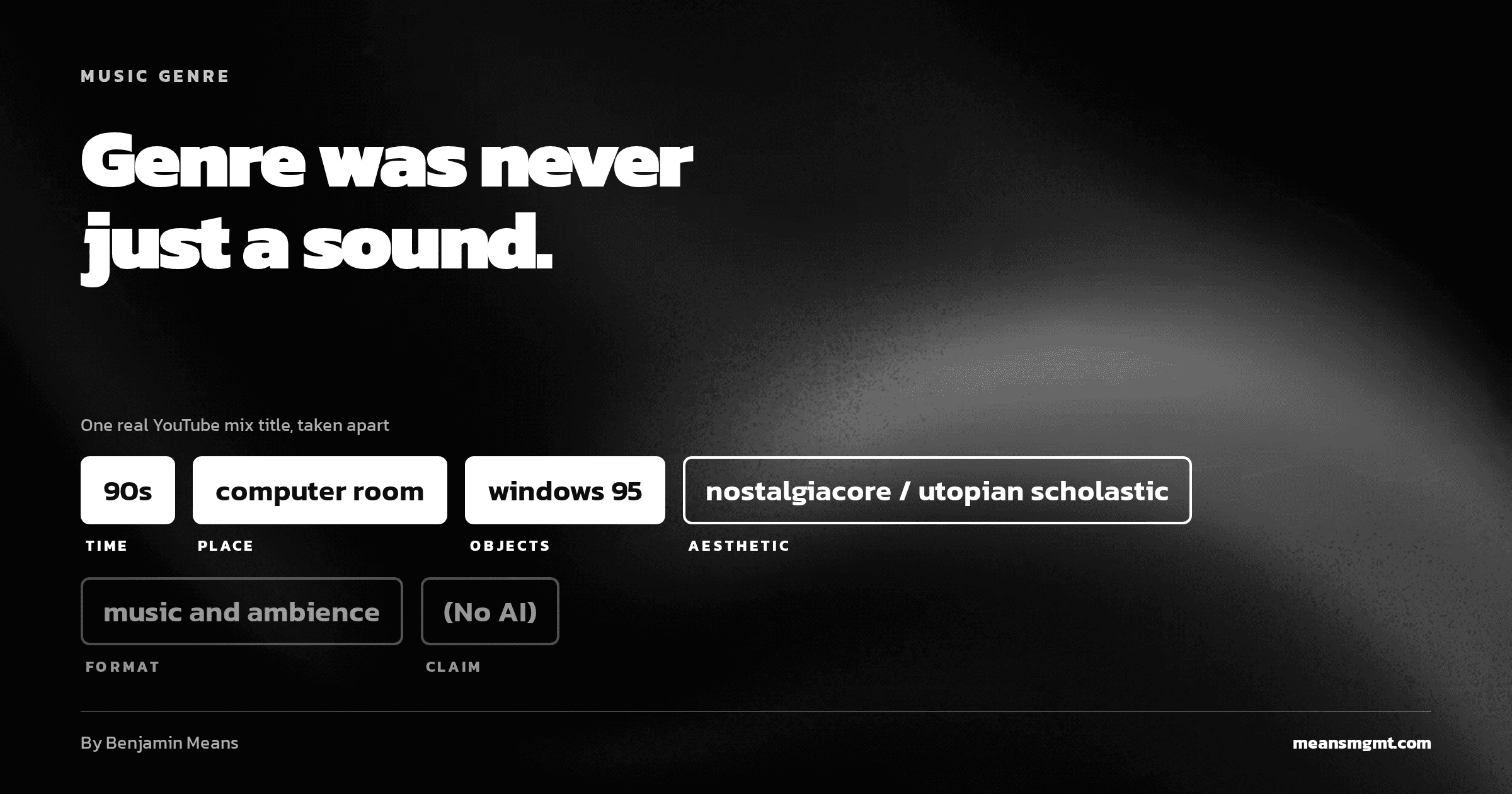
A YouTube mix called “90s computer room” names a decade and a room. It never names a genre.
Kester Spach, a YouTube creator who uploads long music-and-ambience compilations, titled one of his videos Jane Austen main character vibes. The rest of the title calls it "a film score playlist for reading/studying/relaxing," and the description says the score comes from screen adaptations of Austen's novels. "Film score" tells you where the music came from. Everything else names a person to be and something to do while you listen.
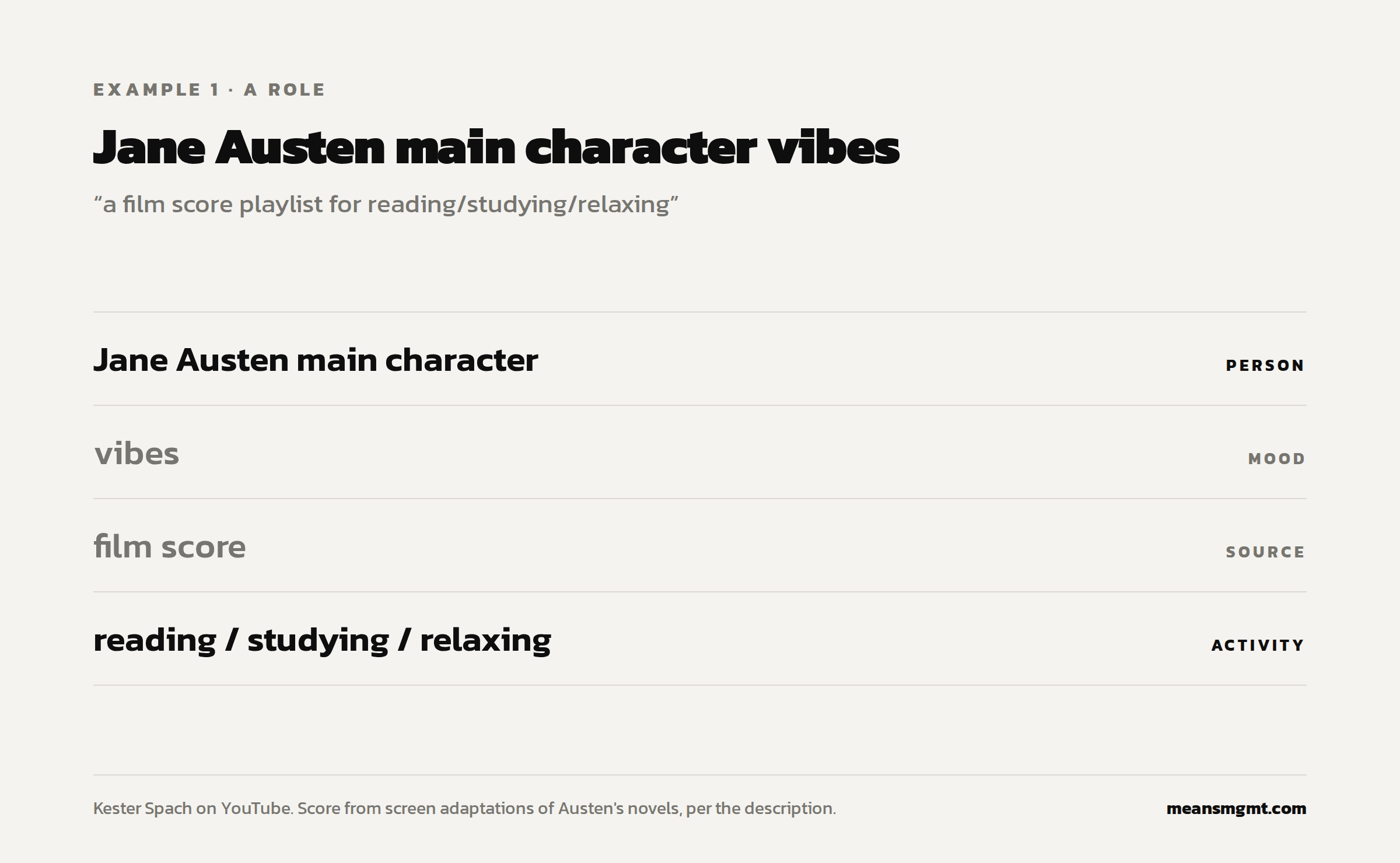
A music genre has long carried that kind of information. It tells you who made the music, when, and where, as much as it tells you about tempo or instruments. Titles like Spach's swap the maker's who, when, and where for the listener's.
What defines a music genre?
A saxophone can show up in jazz, pop, or a dance record. Two tracks can share a tempo and belong to completely different scenes. Musical traits matter, but they can't explain everything people hear in a genre.
In a 2024 study, Veronika Muchitsch and Ann Werner followed two Spotify genres, bubblegrunge and rap français, through genre metadata, playlists, images, and press. Identity, time, and place were still doing the work. Curation and recommendation reshape those ideas, they don't erase them.
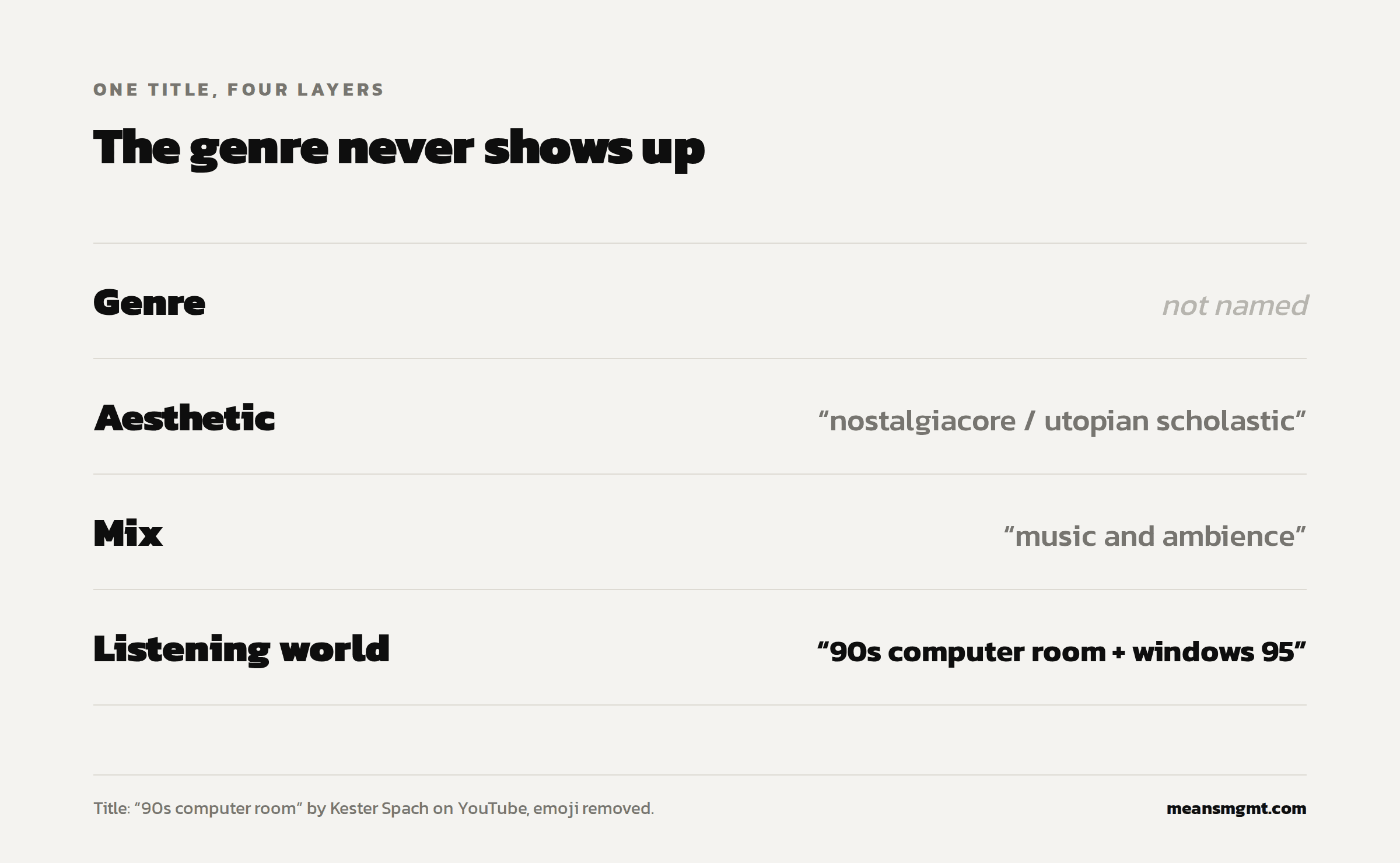
Four things tend to get lumped together: genre, aesthetic, mix, and listening world. A genre is a musical and social category people use over time. An aesthetic is a set of images, references, and moods. A mix is a sequence of recordings. A listening world is who you are, when and where you are, and what you're doing while the music plays.
Spach's 90s computer room upload fits three of them into one title. Minus the emoji, it reads "90s computer room windows 95 nostalgiacore/utopian scholastic music and ambience (No AI)." "Nostalgiacore" and "utopian scholastic" are aesthetics. "Music and ambience" is the format. "90s computer room" and "windows 95" are the listening world. The genre never shows up.
The mix title builds the room
In a 2025 Polyester feature by Mahika Dhar, Spach said the computer-room idea started with the Windows 95 desktop he inherited from his grandfather. He remembered staying up late as a kid playing games on it. He picked music that fit the era, then layered in a whir like an old desktop's and a thin bed of crickets.
A listener who never sat at that computer still gets enough detail to picture the room.
The Jane Austen upload offers a role instead of a room. Utopian Scholastic starts with an aesthetic and dates it to the 1990s. Its thumbnail borrows the look of a DK Eyewitness book cover, and its YouTube chapters are rooms: World Map Bookshop, Eyewitness Museum, Natural History Museum.
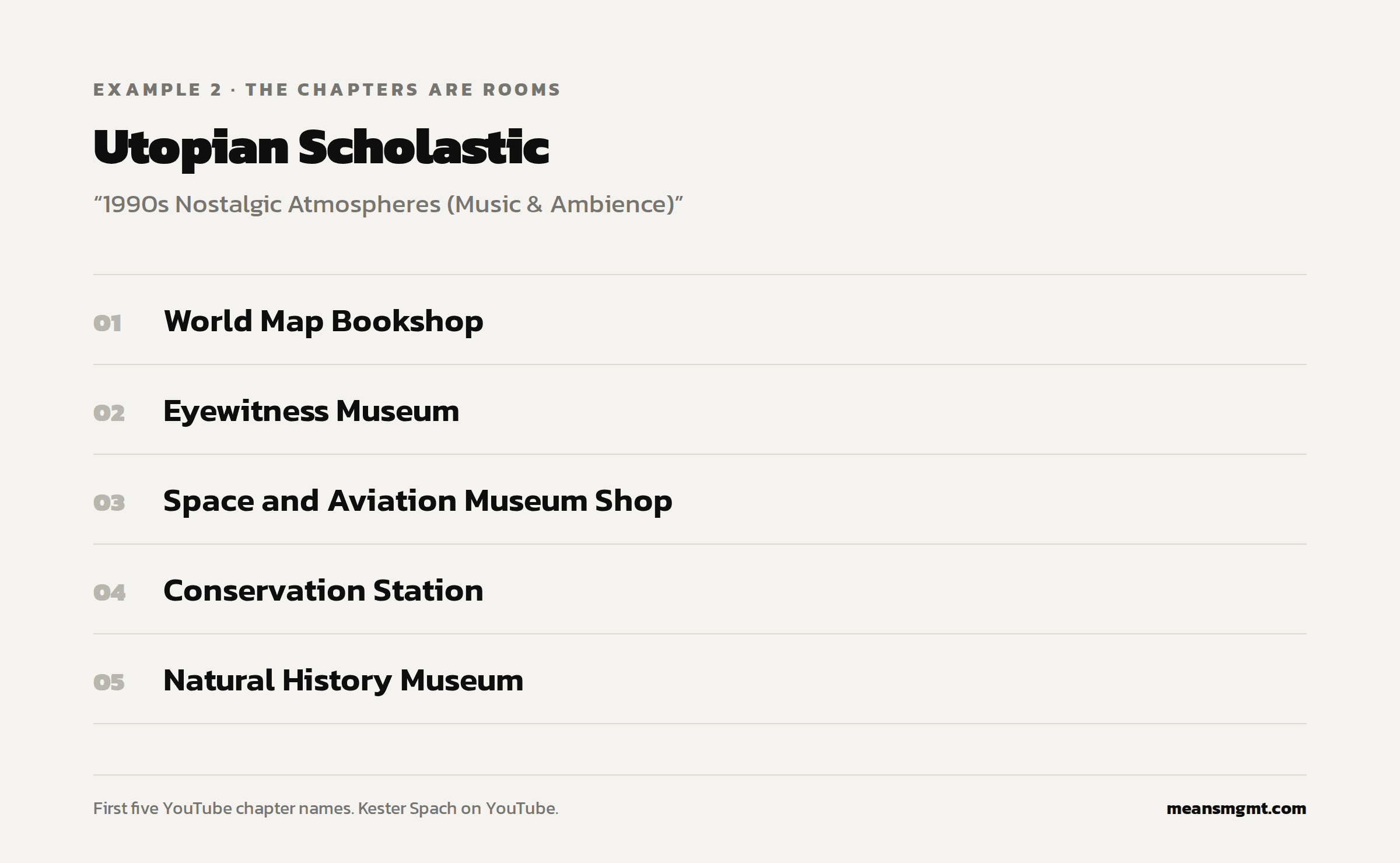
Each title picks a few coordinates from the same short list: person, time, place, activity. None of them needs all four.
That's why the title, thumbnail, music, and background sound all have to agree. I'd expect the same instrumental under two different titles to set up two different expectations.
Nostalgia, ambience, and daylist
Paul Ballam-Cross wrote in 2021 about how chillwave, synthwave, and vaporwave use sounds, images, and references to build a past, sometimes one that only exists in the listener's imagination.
YouTube wrote in December 2025 about ambience channels that blend music and visuals for sleep, relaxation, and focus. Spotify's daylist renames itself through the day to match your mood. Its Playlist Notes, which began rolling out in August 2026, lets Spotify editors and listeners explain why a track belongs on a playlist.
The YouTube uploads get more specific than any of that. "Relaxing music" names an activity. "90s computer room" names a decade, a room, and the machine sitting in it. I don't know how many uploads work this way, when the style started, or whether it's growing. The examples here only show what the framing looks like.
Build the world yourself
The risk for an artist is ending up as background music in a world somebody else built. In any mix without a tracklist, a listener can love the song 23 minutes in and never learn who made it.
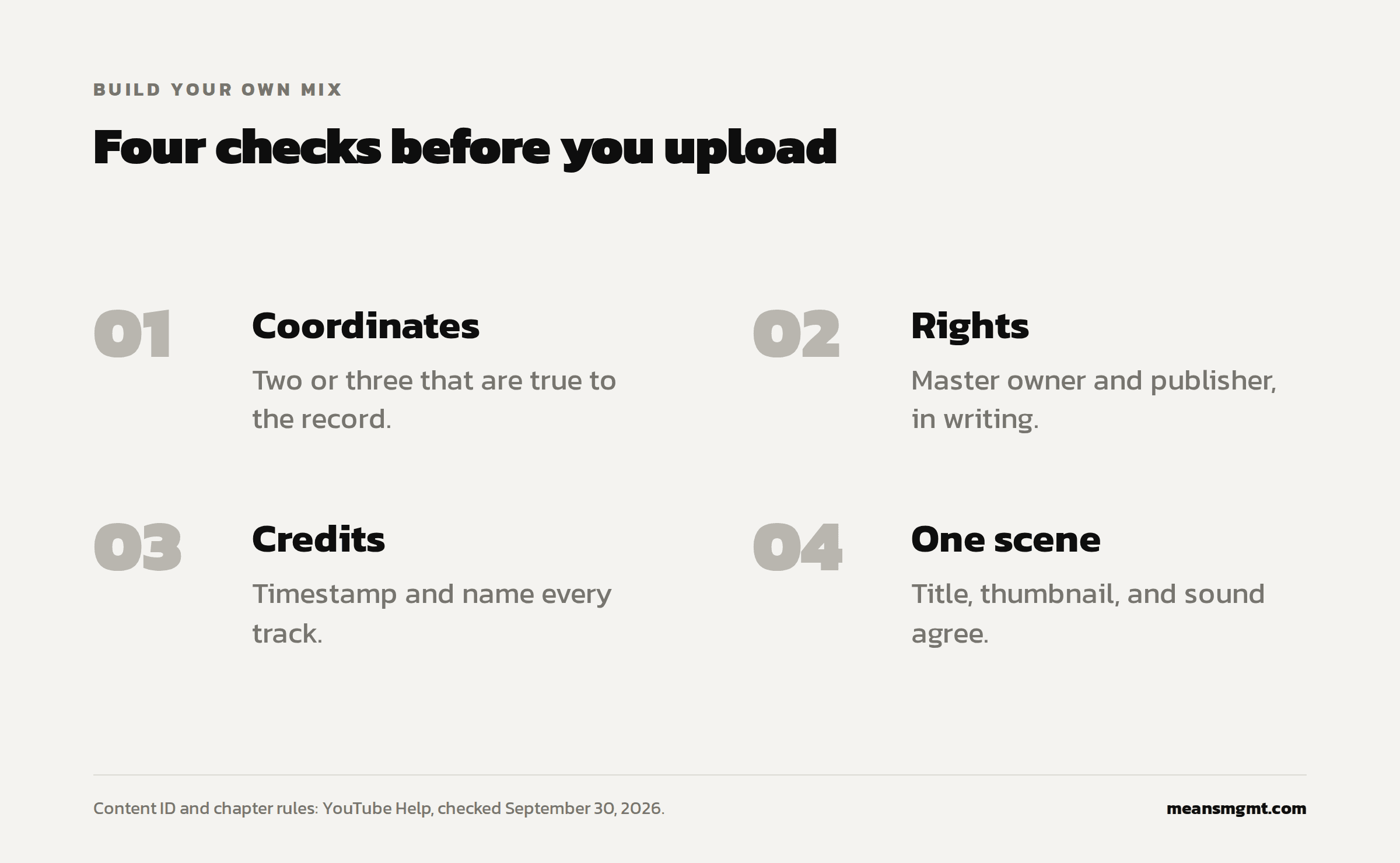
So build your own. Make a YouTube mix that puts your songs next to similar music, under a title built from a specific time, place, and kind of person. Pick coordinates that are actually true to the record. If an album was written on night shifts in a Rust Belt town, that's already a title. There's no need to rename a rock song after a fictional century if nobody involved has a connection to it.
Pick two or three real coordinates: a decade, a room or a town, a role or an activity. If you don't know where people play the song, ask them.
Only use recordings you control, or have written permission for from both the master owner and the publisher. An artist's yes isn't enough if a label owns the master. Anything else can trigger Content ID, and the rights owner can block the video or run ads on it. That includes your own songs if your distributor runs Content ID for you, so ask it to clear your channel first.
Timestamp every track and name every artist. Three or more timestamps, starting at 00:00, also give you YouTube chapters, so a listener can jump back to the song they liked. Spach names his Utopian Scholastic chapters after rooms, which does both jobs at once. Link your streaming profiles right under the tracklist.
Keep one scene everywhere. Title, thumbnail, sequencing, and any background sound should all point at the same room.
A label already owns a catalog that can fill several of these mixes. Older releases get a new place to live, which is a big part of catalog marketing. A manager with three artists in the same lane can build one world and credit all three.
One catch if the channel earns ad money. YouTube's monetization rules list "collections of songs from different artists (even if you have their permission)" as reused content that isn't eligible for ads. Treat a multi-artist mix as a discovery tool, not an income stream.
The title also has to get found
The scene words do a second job as search terms. YouTube says its search weighs how well the "title, tags, description, and video content" match a query, then the watch time a video earns for that query. It also says tags play "a minimal role." So put the words people would actually type in the title, and make sure the mix holds them once they arrive.
Spotify is harder to plan around. Its help page says results mix personal listening history with current and all-time popularity. It adds that the more streams and followers you have, the higher you appear. For a broad search like "low key country and rock," Spotify says it might build a playlist itself and show that instead. A new playlist with a sharp title starts behind both.
Most "playlist SEO" rules you'll find online, like follower thresholds or how much of a description gets indexed, come from companies that sell tools or placements. I couldn't find one that shows its method. Keep the genre tags on the release too, since they still help people find the record.
Once a mix is up, test it in paid. Run the same excerpt with two frames, keeping the audience and destination as steady as you can. One leads with the genre, the other with the setting. If the ad sends people to Spotify, watch saves and repeat listeners in Spotify for Artists. We haven't run this exact test yet, so treat any result as directional.
If you're planning a release and want a second opinion on the world around it, reach out at benjamin@meansmgmt.com.
What the title can't tell you
Two of Spach's titles end in "(No AI)." That's the uploader's claim, and a title can't prove how every recording was made. A channel name also can't tell you whether a curator, a label, or a rights holder posted the music. Those questions need their own piece.
After an hour in that computer room, I'd still want to know which track a listener went back to play.
FAQ
Questions we getIf you have a release coming, start with two quick questions, about three minutes in total, and we’ll scope your campaign. Want the numbers first? The benchmarks report is free.

